5-Amino-1MQ Capsules
performanceweight-loss
Research peptides studied for GH secretion, anabolic signalling, muscle synthesis, and endurance. CJC-1295, Ipamorelin, Sermorelin, MK-677. +99% purity, COA every batch.
Designing a performance research protocol?
Use the Stack Builder to match your goal to the right protocol.
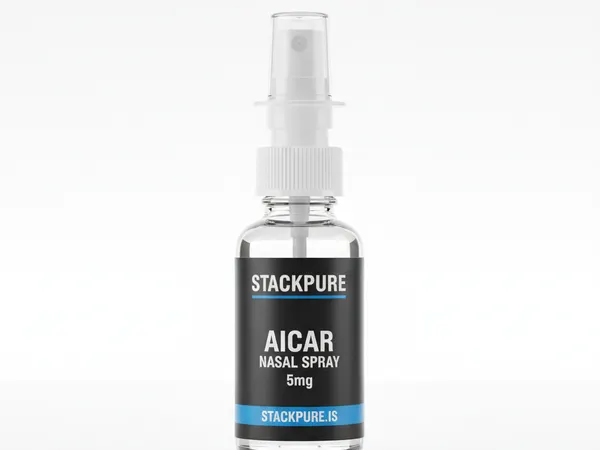
Performance research peptides are compounds studied for their effects on GH secretion, anabolic signalling, muscle protein synthesis, endurance, and body composition in preclinical models. Key categories include GH secretagogues (CJC-1295, Ipamorelin, Sermorelin, GHRP-6, Hexarelin, MK-677), selective androgen receptor modulators studied in muscle wasting models (RAD-140, LGD-4033, Ostarine), and metabolic activators (AICAR, SR9009, Cardarine). All are.
CJC-1295 is a synthetic analogue of growth hormone releasing hormone (GHRH) with the DAC (Drug Affinity Complex) modification, an addition that extends its half-life from minutes (native GHRH) to approximately 6–8 days by enabling albumin binding. In preclinical studies, CJC-1295 significantly elevated mean GH plasma levels and IGF-1 levels in a dose-dependent manner without the pulsatile release disruption seen with full GHRH. It is typically studied in combination with a GHRP such as Ipamorelin to achieve synergistic GH pulse amplification..
Ipamorelin and GHRP-6 are both GH secretagogue receptor (ghrelin receptor) agonists, but they differ in selectivity. GHRP-6 (His-D-Trp-Ala-Trp-D-Phe-Lys-NH2) strongly stimulates GH but also elevates cortisol and prolactin, and produces significant appetite stimulation via central ghrelin pathways. Ipamorelin is a highly selective GH secretagogue that produces clean GH pulses with minimal cortisol/prolactin elevation and substantially less appetite stimulation, making it the preferred compound when GH stimulation without appetite side effects is desired in a research protocol.
SARMs (Selective Androgen Receptor Modulators) are compounds that bind androgen receptors with tissue selectivity, showing anabolic activity in muscle and bone while demonstrating reduced androgenic activity in prostate and other tissues compared to testosterone. In preclinical research, they are studied in muscle wasting models (cachexia, sarcopenia), bone density models, and body composition research. Key compounds include RAD-140, LGD-4033, and Ostarine (MK-2866). SARMs remain research compounds and are not approved drugs..
Yes. Stackpure ships research peptides to the USA, UK, Canada, and Australia with third-party COA on every order confirming +99% purity. Delivery is 1–3 business days to the USA, UK, Canada, and Australia.
Stackpure's performance line is peptide-only. For SARMs research specifically (RAD-140, LGD-4033, Ostarine and more), Rainbow Peptide carries a dedicated SARMs research line.